Best Self-Help Books for Anxiety Beginners
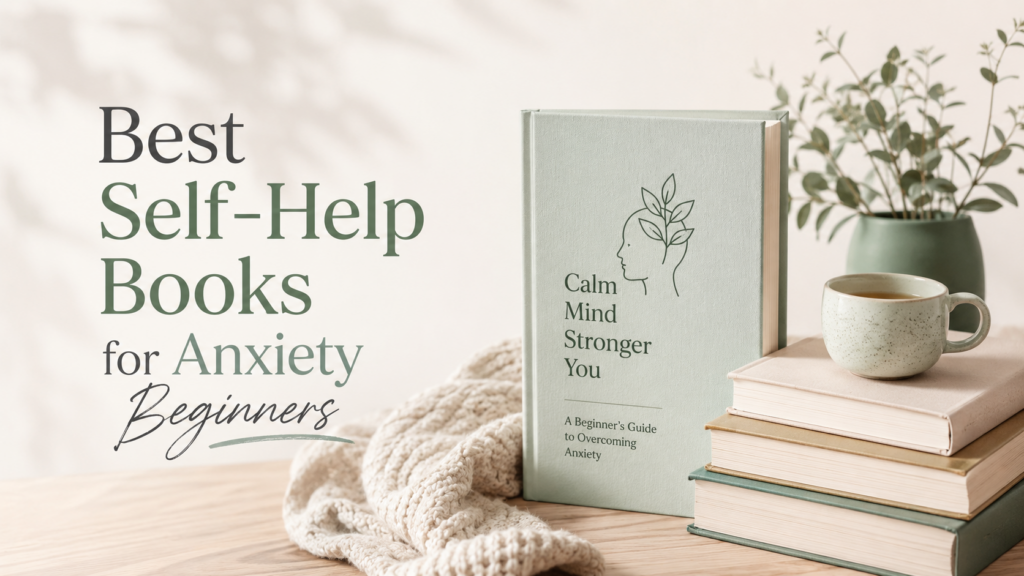
If you have never read a self-help book before and your anxiety has just started taking over your days, the sheer number of options can feel like its own kind of overwhelming. Bookstore shelves are full of titles promising to fix you in a week. Most beginners do not need another promise. They need a clear starting point.
This guide picks books written for people who are new to anxiety self-help, not therapists, not people who have already tried five workbooks. Each one earned its spot because it explains anxiety in plain terms, gives you something to actually do, and does not require prior knowledge of therapy language.
How We Picked These Books
We looked at what beginners consistently struggle with: books that open with heavy clinical theory, workbooks that assume you already know CBT terminology, and memoirs that describe the author’s anxiety without giving the reader any tools. We cross checked recommendations from clinical psychologists and behavioral therapy associations against reader feedback, then narrowed the list to titles that are genuinely approachable on a first read.
Best Self-Help Books for Anxiety Beginners
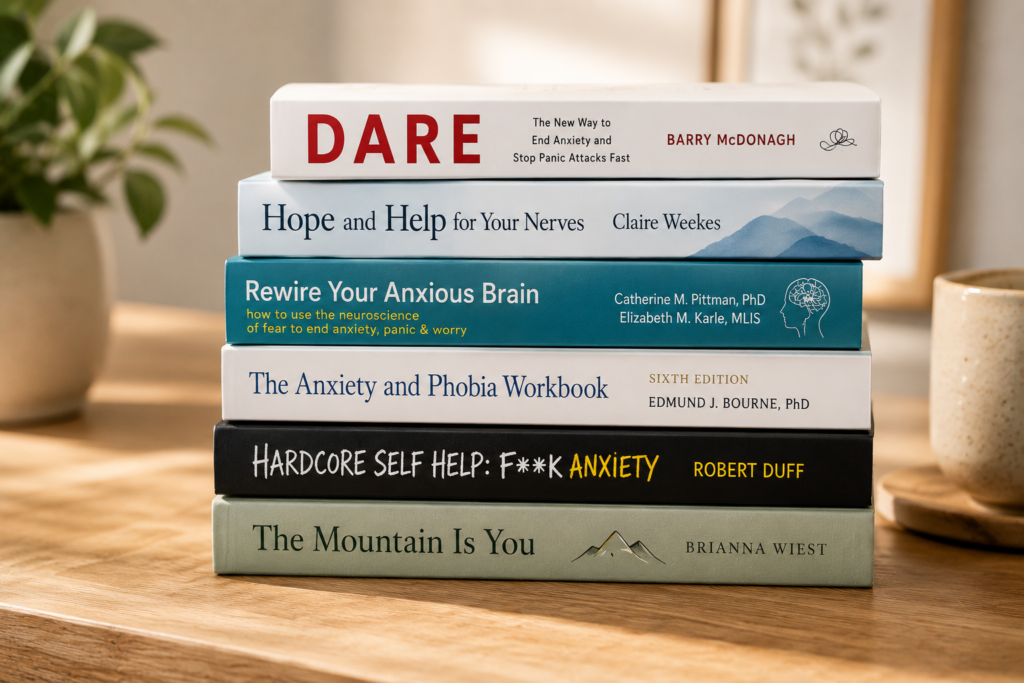
1. DARE by Barry McDonagh

Dare: The New Way to End Anxiety and Stop Panic Attacks
Shop NowThis is often the first book recommended to someone having their first panic attack. McDonagh lays out a four step approach that is easy to remember even when your mind is racing. It works well for people whose anxiety shows up as sudden panic or health related fear, and it does not ask you to sit through pages of theory before getting to the practical part.
2. Hope and Help for Your Nerves by Claire Weekes

Hope and Help for Your Nerves: End Anxiety Now
Written decades ago, this book still holds up because Weekes writes like someone talking you through a hard moment, not a textbook. It is a gentle entry point if the idea of “fixing” your anxiety feels like too much pressure right now. Many readers say her voice alone is calming before they even get to the techniques.
3. Rewire Your Anxious Brain by Catherine M. Pittman and Elizabeth M. Karle
If you are the type who feels calmer once you understand why something is happening, this one explains anxiety from a brain science angle without getting too technical. Knowing that anxiety is a survival response and not a personal failing changes how a lot of beginners relate to it.
4. The Anxiety and Phobia Workbook by Edmund Bourne
This is the workbook to move to once you want more structure. It was written by a clinician and is based on established anxiety treatment research. Because it is a workbook rather than a straight read, it works best for people who like writing things down rather than just reading about them.
5. Hardcore Self Help: Anxiety by Robert Duff
Not every beginner wants a soft, reassuring tone. Duff writes with humor and blunt honesty, which makes this a good fit if traditional self-help language feels distant or preachy to you. The techniques underneath the humor are still solid.
6. The Mountain Is You by Brianna Wiest

The Mountain Is You: Transforming Self-Sabotage into Self-Mastery
This book leans more into self-sabotage and internal conflict than pure anxiety management, but for readers whose anxiety is tangled up with avoidance and procrastination, it connects some dots that anxiety-specific books miss.
What to Look For When You Are New to Anxiety Books
A few things separate a beginner friendly book from one that will sit unread on your shelf.
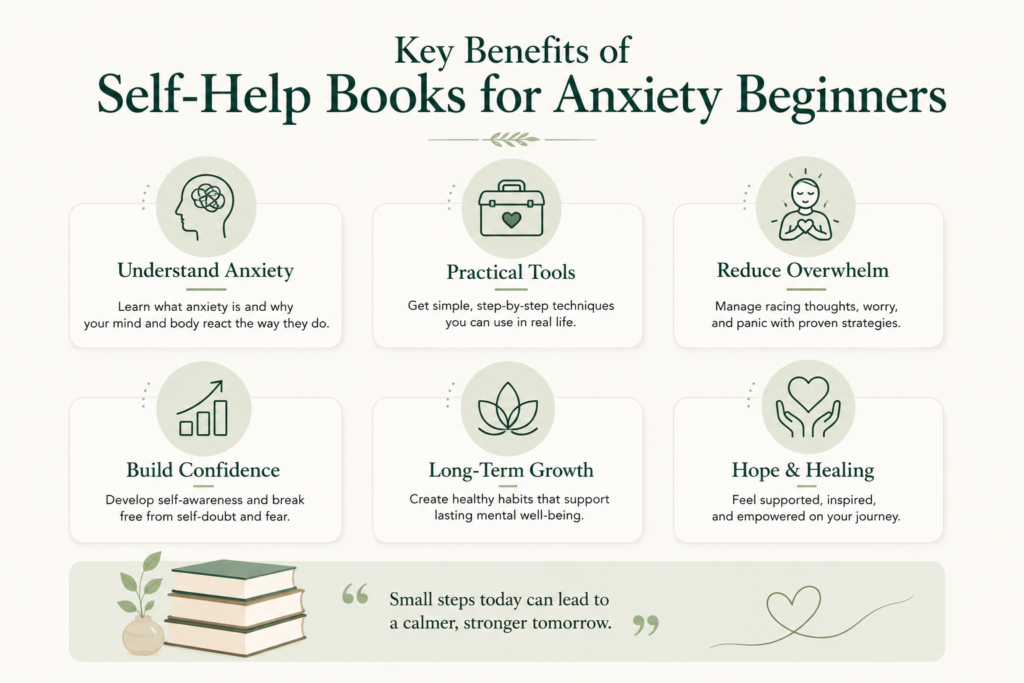
It should explain before it prescribes. You want at least a chapter that helps you understand what anxiety actually is before it hands you exercises.
It should not require outside knowledge. If a book keeps referencing therapy terms without defining them, it was not written with a first time reader in mind.
It should give you something to do today. Beginners lose momentum with books that stay theoretical for too long. Look for concrete exercises within the first third of the book
Length matters more than people admit. A 400-page book can feel like a mountain when you are already anxious. Shorter, focused books tend to get finished, and a finished book helps more than an unfinished one.
Common Mistakes Beginners Make
Starting with a workbook before an explainer book is one of the most common ones. Workbooks ask you to apply skills you have not learned yet, which can feel discouraging fast. Reading a book that promises anxiety will disappear completely is another trap. The realistic goal for a first book is understanding and one or two tools you actually use, not a cure.
It also helps to remember that a book is a starting point, not a replacement for support if your anxiety is affecting daily functioning. These books work well alongside, not instead of, professional help when it is needed.
FAQs
What is the best self-help book for anxiety beginners specifically?
DARE by Barry McDonagh is usually the easiest entry point because it gives you a simple framework fast, without requiring prior knowledge of anxiety treatment concepts.
Should I start with a workbook or a regular book?
Start with a regular book. Workbooks work better once you already understand the basic concepts they are asking you to apply.
Can a self-help book replace therapy?
No. These books can teach you tools and help you understand anxiety, but they are not a substitute for professional treatment if anxiety is significantly affecting your life.
How long does it usually take to see a difference?
Most readers notice a shift in how they think about their anxiety within a few weeks of consistently applying even one technique, though this varies by person.