Best Tinted Sunscreen for Oily Acne-Prone Skin
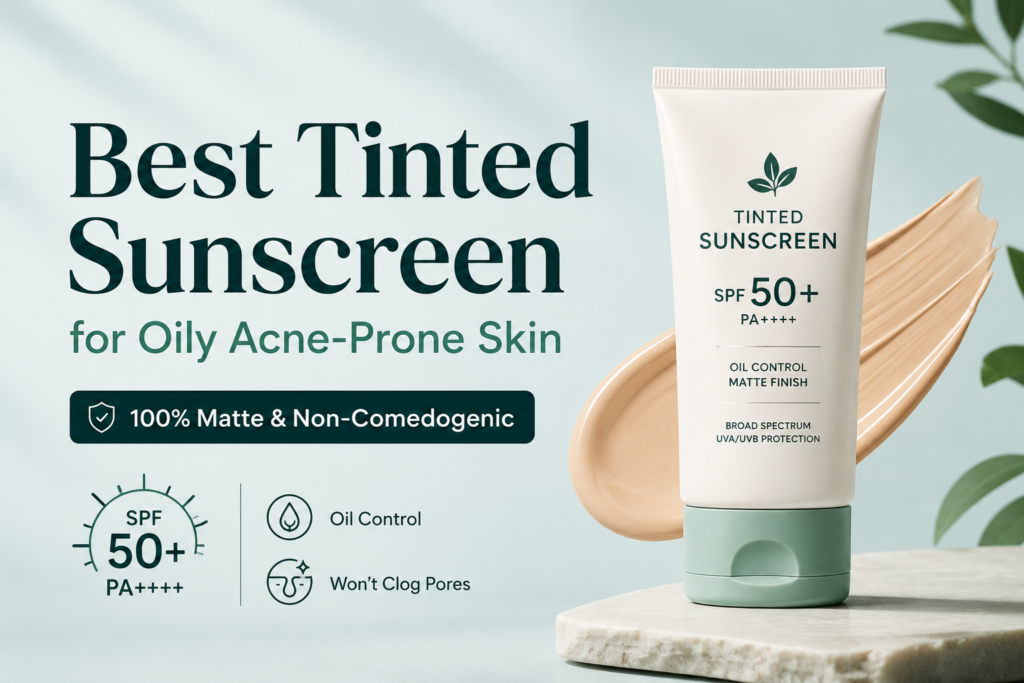
If sunscreen has ever left your face looking like a glazed donut by noon, you are not imagining it. Most tinted sunscreens are built for dry or normal skin, and on oily, breakout-prone skin they slide, cake around the nose, and sometimes trigger new blemishes within days. The right formula does the opposite. The best tinted sunscreen for oily acne-prone skin controls shine, evens out redness from active breakouts, and protects the skin without adding a single clogged pore to your day.
This guide breaks down exactly what to look for, which formulas and ingredients actually hold up on oily skin, and how to build a routine around SPF instead of skipping it out of frustration.
Why Oily and Acne-Prone Skin Needs a Different Kind of Sunscreen
Sebum does not offer any real sun protection, no matter how shiny your skin gets by afternoon. That is a common myth, and it leads people to skip SPF on the assumption that oily skin is already somehow shielded. It is not. UV exposure still damages the skin barrier and, more relevant if you deal with breakouts, it also darkens and prolongs the red or brown marks left behind after a pimple heals. Skipping sunscreen while treating acne marks is working against your own routine.
The real issue is formula, not the idea of sunscreen itself. Traditional sunscreens often rely on heavy oils, waxes, and occlusive emollients to spread smoothly and resist water. Research on acne cosmetica points to certain fatty esters, including isopropyl myristate and isopropyl palmitate, as ingredients that may contribute to follicular plugging in acne-prone skin,Those same ingredients sit inside the pore and trap sebum and dead skin cells, which is exactly how a clear complexion turns into a breakout within a week of trying a new SPF. which is why checking the ingredient list matters as much as reading the front label.
What “Non-Comedogenic” Actually Means (and Why It Is Not a Guarantee)
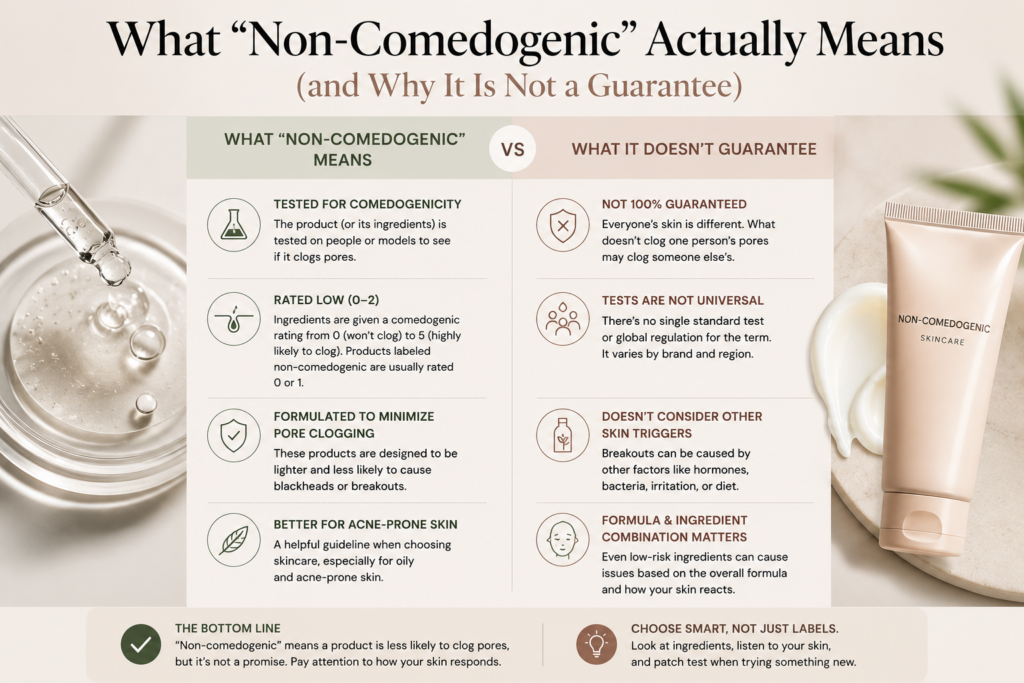
Every list of sunscreens for oily skin leads with the word non-comedogenic, but few explain what it is actually based on. The term comes from lab testing, usually on ingredients rather than finished products, that measures how likely a substance is to clog a pore. The American Academy of Dermatology recommends a broad-spectrum, water-resistant sunscreen with an SPF of 30 or higher, and for acne-prone skin specifically advises choosing formulas that are labeled oil-free and non-comedogenic
.
Here is the part most articles skip. A later reassessment of how comedogenicity testing works found that finished cosmetic formulations do not necessarily behave the same way as their individual ingredients do in isolation
, since a comedogenic raw ingredient can end up in a finished product that tests as safe once it is diluted and combined with other components. In plain terms, a non-comedogenic label is a strong signal, not a scientific certainty, and it is still worth patch testing anything new for a week on your jaw before applying it to your whole face.
Mineral vs Chemical Filters for Breakout-Prone Skin
Both filter types can work on oily skin, and the right one usually comes down to how reactive or inflamed your skin currently is.
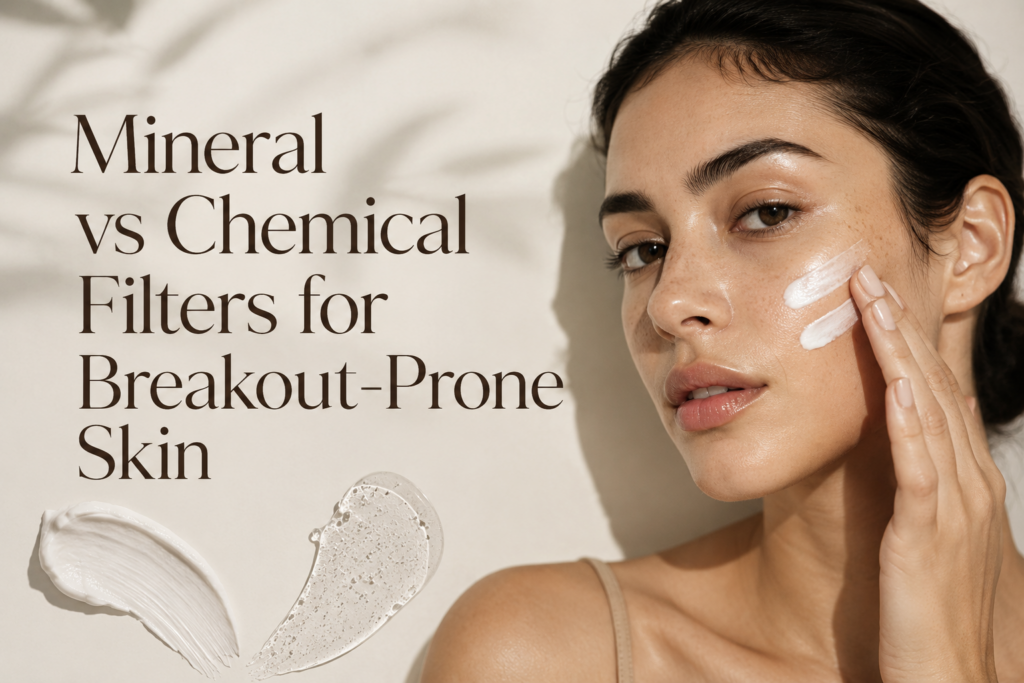
Mineral filters, mainly zinc oxide and titanium dioxide, sit on top of the skin instead of absorbing into it. They tend to be gentler on inflamed or actively breaking out skin, and zinc oxide in particular has some anti-inflammatory properties, which is useful if your acne is currently red and irritated rather than just oily. The tradeoff is the classic white cast, though tinted formulas are built specifically to cancel that out.
Chemical filters absorb into the skin and convert UV rays into heat, which the skin then releases. Modern chemical filters tend to feel lighter and blend in without any cast, which is part of why they show up so often in tinted, oil-free formulas marketed at combination and oily skin. If your skin is currently calm and just prone to shine, a chemical or hybrid filter often gives the most invisible, breathable finish.
Ingredients Worth Looking For
A few ingredients consistently show up in the formulas that actually perform well on oily, acne-prone skin, and they are worth scanning for on the label before you buy anything.
Niacinamide is one of the most useful additions to a tinted sunscreen for this skin type. A double-blind, placebo-controlled clinical trial testing a 2% niacinamide formula found that the sebum excretion rate in the treated group was significantly reduced after two and four weeks of use compared to the placebo group. That is a meaningful detail, since a sunscreen that actively helps regulate oil production over time is doing more than just sitting on the surface for a few hours.

Paula’s Choice RESIST SPF 30 Super-Light Wrinkle Defense Tinted Sunscreen
$36.00 per fluid ounce
Silica and kaolin or bentonite clay help absorb surface oil throughout the day, which is part of why gel and fluid textures tend to outperform creams on oily skin. Niacinamide, allantoin, and centella asiatica calm inflammation without adding heaviness. Avoid heavy plant butters like coconut oil or cocoa butter, high concentrations of silicones, and added fragrance, since these are the categories most frequently linked to clogged pores and irritation on reactive skin.
Texture and Finish: What Actually Wears Well on Oily Skin
Gel and fluid textures consistently perform better than creams on oily and acne-prone skin, since they dry down fast and do not add extra emollient weight on top of skin that is already producing enough oil on its own. A tinted sunscreen fluid gives light, buildable coverage that evens out redness from active breakouts without looking like a heavy foundation layer sitting on top of already textured skin.
Matte finish sunscreens are popular for obvious reasons, but a formula that turns completely powdery within an hour can actually make oily skin overcompensate and produce more shine by midafternoon. A finish described as natural or soft matte, rather than fully flat, tends to hold up more evenly through a full workday without needing a heavy midday touch up.
How to Build the Rest of Your Routine Around SPF
Sunscreen works best as the last step of a simple morning routine, not layered on top of five other products.
- Cleanse with a gentle, non-stripping cleanser suited to oily skin.
- Apply any acne-focused actives, such as a niacinamide serum, salicylic acid treatment, or azelaic acid, and let them absorb for a few minutes.
- Skip a heavy moisturizer if your tinted sunscreen already feels hydrating, since doubling up on rich products is one of the fastest ways to end the day looking greasy.
- Apply your tinted sunscreen generously. About two finger lengths worth of product is the standard amount dermatologists recommend for full face coverage, and using less than that quietly cuts your actual SPF protection no matter what the label says.
- Reapply every two hours if you are outdoors for extended periods, using a pressed powder SPF or a sunscreen stick if reapplying a full liquid formula over makeup feels impractical.
If you already use a niacinamide toner for oily skin as part of your morning routine, a tinted sunscreen with the same active ingredient reinforces that oil control step instead of working against it.
Common Mistakes That Undo a Good Sunscreen Routine
A handful of habits quietly cancel out even a well chosen, non-comedogenic sunscreen.
Using body sunscreen on your face is one of the most common. Body formulas are almost always heavier and more occlusive than facial sunscreens, since they are built for larger areas of thicker skin, and they clog facial pores far more easily.

SKIN1004 Centella Hyalu-Cica Water-Fit Sun Serum UV SPF 50
$11.09 per fluid ounce
Applying too little product is another. A sunscreen that tests as SPF 50 in a lab only delivers that protection at the tested application amount. Most people apply a fraction of that, which quietly turns an SPF 50 into something closer to SPF 15 or 20 in real world use.
Skipping reapplication because it feels inconvenient over makeup is the third. A powder sunscreen or a stick formula solves this without disturbing a full face of makeup, and using one is far better than skipping reapplication entirely.
Choosing a sunscreen based only on the front label claims, without a glance at the ingredient list, is the last one. A sunscreen can be marketed as oil-free and still contain ingredients further down the list that clog pores on reactive skin, so a quick scan of the first five ingredients tells you more than the marketing copy on the bottle.
Frequently Asked Questions
Does tinted sunscreen cause breakouts on oily skin?
It can, but usually because of the specific formula rather than tinted sunscreen as a category. Formulas built with non-comedogenic, oil free ingredients and lightweight gel or fluid textures are far less likely to trigger breakouts than heavier cream based tinted sunscreens.
Is mineral or chemical sunscreen better for acne-prone skin?
Both can work well. Mineral sunscreens tend to be gentler on inflamed, actively breaking out skin, while modern chemical filters often feel lighter and blend in more invisibly on calmer oily skin. The better choice depends on how reactive your skin currently is.
Can tinted sunscreen replace my regular moisturizer?
For oily skin, often yes. Many tinted sunscreens built for this skin type include enough hydrating ingredients to skip a separate moisturizer, especially in warmer months when oily skin needs less added richness.
How much tinted sunscreen should I actually apply?
About two finger lengths worth of product for full face coverage is the amount most dermatologists recommend to get the SPF protection listed on the label. Applying less quietly reduces your actual protection level.
Do I still need sunscreen if I already use niacinamide or salicylic acid?
Yes. Treating acne and protecting against UV damage are two separate jobs. Skipping SPF while using acne actives can actually slow down how quickly your post-acne marks fade, since UV exposure makes existing discoloration more persistent.
The Bottom Line
The best tinted sunscreen for oily acne-prone skin is not the one with the highest SPF number or the most dramatic before and after photos online. It is the one built with a lightweight, non-comedogenic formula, real oil control ingredients like niacinamide or silica, and a finish that holds up through a full day without turning your face into a shine trap by 2pm. Get the formula right, apply enough of it, and reapply when you are actually outdoors, and sunscreen stops being the step that ruins your skin and becomes the step that protects everything else you are working on.