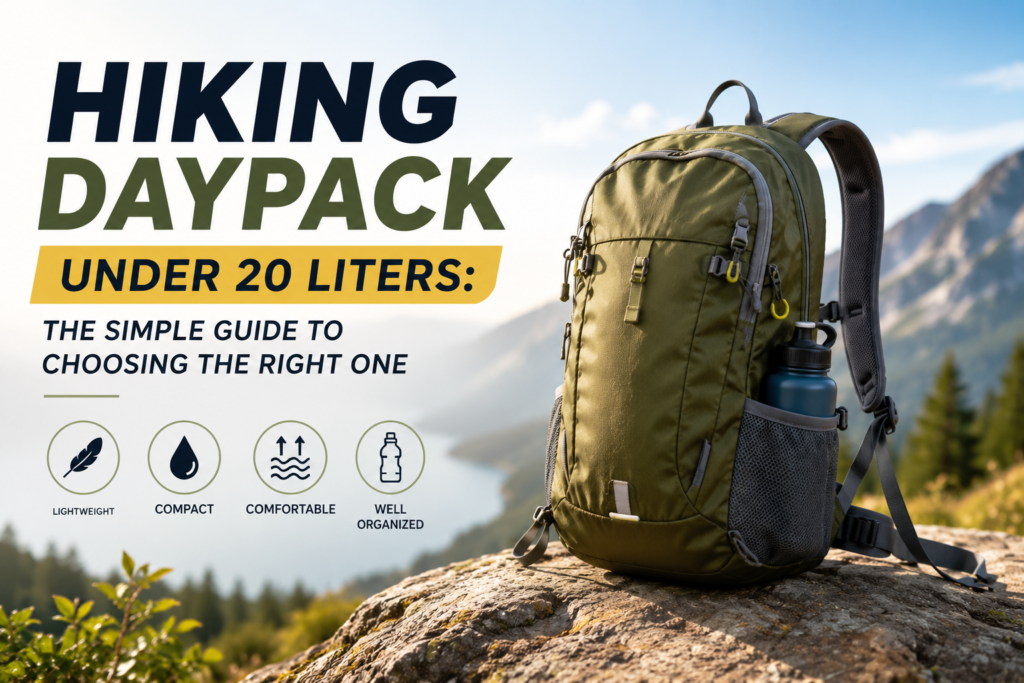
Hiking Daypack Under 20 Liters: The Simple Guide to Choosing the Right One
Picking a bag for a short hike sounds easy. Until you stand in a store looking at fifty packs, all shaped like potatoes, all claiming to be “the best.” Your water bottle needs to fit. Your snacks need a home. Your phone should not get squished. That is really it.
A hiking daypack under 20 liters is the small backpack made for exactly this job. It is not for camping trips. It is not for carrying a tent. It is for short walks, half day hikes, and quick trips up a trail where you do not need much gear but still want to be ready.
This guide explains everything in plain, simple words. No confusing gear talk. No long product jargon. Just clear answers, real examples, and honest advice so you can pick the right hiking daypack under 20 liters the first time, without wasting money.
Why This Topic Actually Matters
A lot of hikers buy a bag that is either too big or too small. A pack that is too big feels heavy even when it is half empty, because the straps and frame are built for more weight. A pack that is too small leaves your water bottle poking out the top or your jacket tied around your waist.
Getting the size right changes how your whole hike feels. A good small daypack sits close to your back, does not bounce around, and lets you move fast on the trail. That is why so many hikers, from beginners to trail runners, search for a hiking daypack under 20 liters instead of a bigger 30 or 40 liter bag.

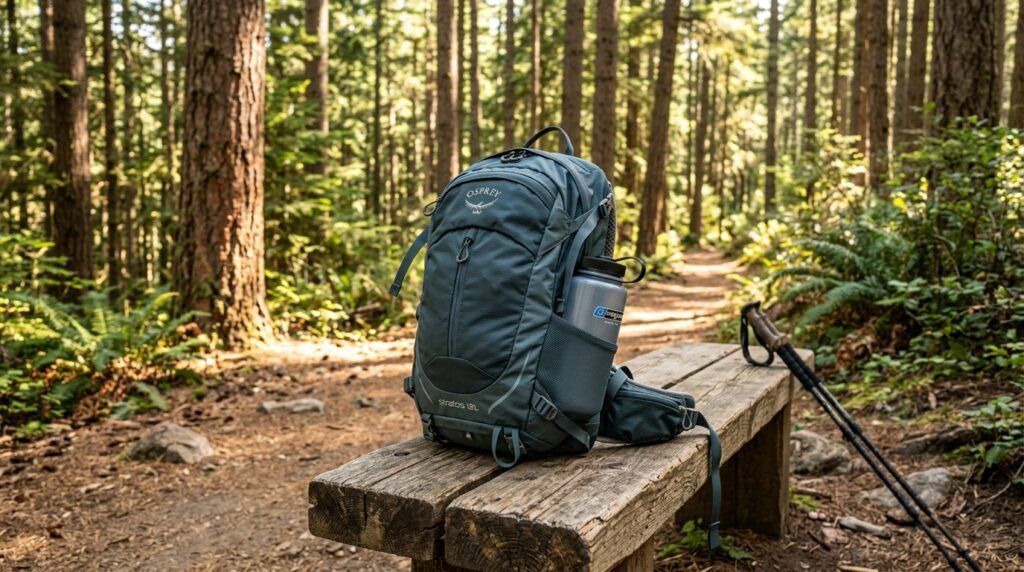
Osprey Sportlite Lightweight Hiking Backpack with Hydraulics Reservoir for Men & Women – Everyday Hydration Travel Bag
What Does “Under 20 Liters” Actually Mean?
Liters measure how much space is inside the bag, the same way liters measure how much water fits in a bottle. A 20 liter bag is roughly the size of a large school backpack. Anything under that, so 10, 15, or 18 liters, is smaller and lighter.
To put it simply:
- 10 to 15 liters – enough for water, keys, phone, and a light snack. Good for walks under two hours.
- 15 to 18 liters – room for a light jacket, more snacks, and a small first aid kit. Good for half day hikes.
- 18 to 20 liters – the largest size that still counts as a small pack. Fits a rain layer, lunch, and extra water. Good for full morning or afternoon hikes in mild weather.
Outdoor experts share this perspective. Testing teams at OutdoorGearLab highlight that packs under 20 liters excel on short two-to-three-hour day hikes and light trail adventures requiring minimal gear. Similarly, reviewers at CleverHiker note that a 15-to-20-liter daypack ideal for warm-weather outings easily accommodates your core essentials: water, phone, keys, wallet, a small snack, and an extra layer.
Who Should Buy a Hiking Daypack Under 20 Liters
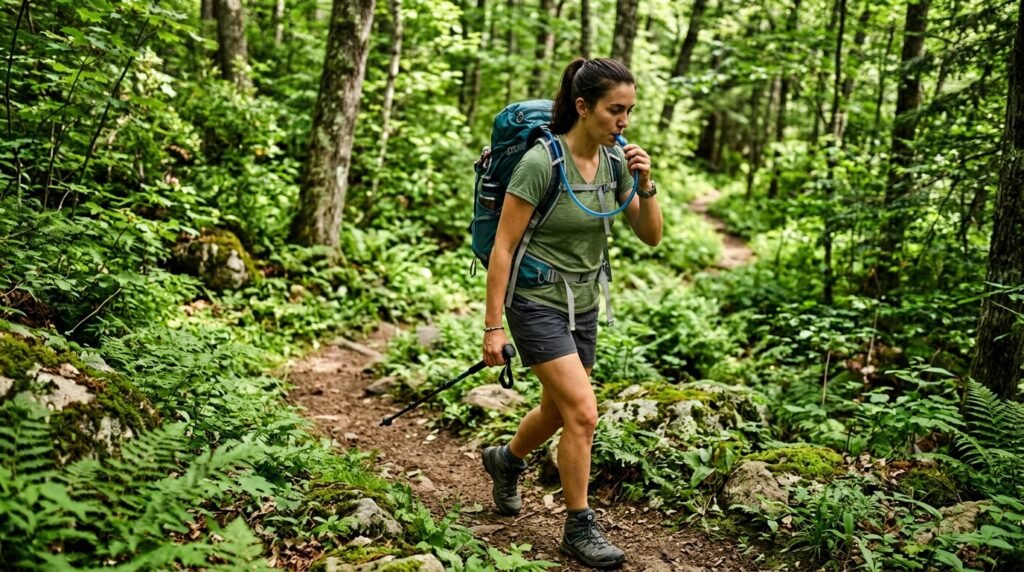
This size is not for everyone, and that is fine. Here is who it actually suits.
- Casual weekend hikers who walk two to four miles on clear trails.
- Trail runners and fastpackers who want a light bag that does not bounce.
- Parents who need a quick bag for a short family walk.
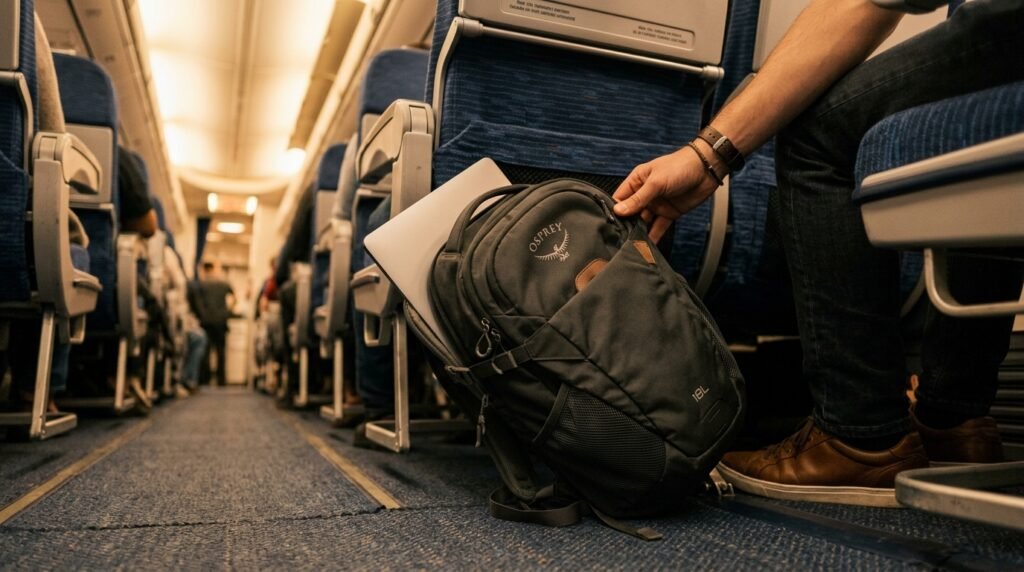
- Travelers who want a daypack that also works as a city bag or flight carry on.
- Minimalist hikers who already know how to pack light and do not want extra straps and pockets they will never use.
If you hike for six or more hours, camp overnight, or hike in cold mountain weather, you likely need something bigger. REI’s gear advisors explain that hikers heading out for shorter trips under two hours can usually get away with a smaller daypack, but longer treks need enough room for food, water, and safety gear, which is why REI suggests a smaller daypack of 10 to 20 liters for sub two hour outings while multi hour treks call for more space.
What to Look For in a Small Hiking Daypack
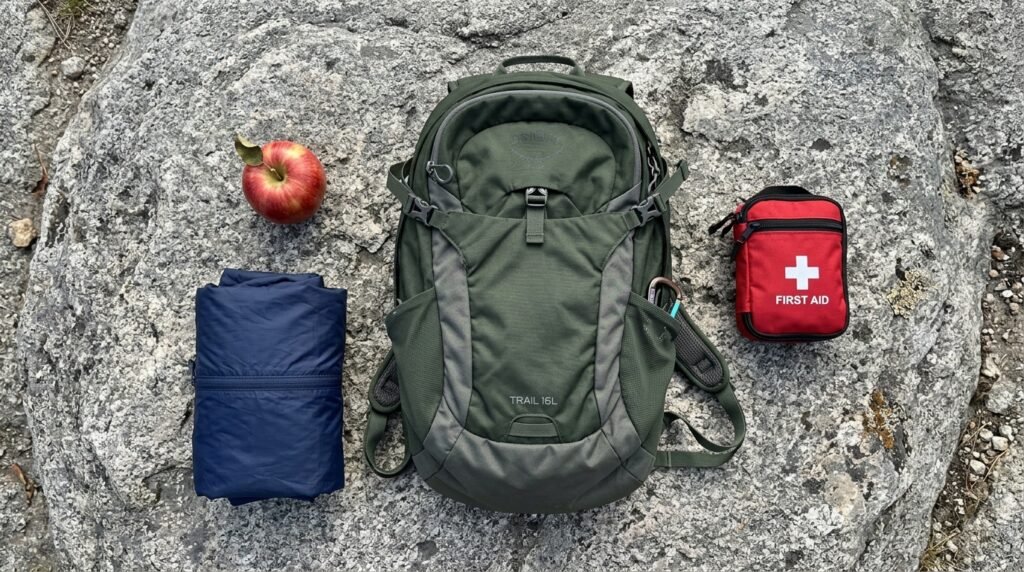
Not every small bag is a good hiking bag. Here is what actually matters, explained simply.
1. Weight of the Bag Itself
A daypack should not be heavy before you even put anything in it. Look for a bag under one pound. The lighter the empty bag, the more comfortable your hike will feel, especially on longer walks.
2. Material and Durability
Trail bags rub against rocks, branches, and car seats. Look for tough nylon fabric, at least 200 denier, with reinforced bottoms. This number tells you how thick and scratch resistant the fabric is.
3. Back Panel and Airflow
Nobody likes a sweaty back. A mesh or foam back panel lets air move between you and the bag. This matters most in warm weather hikes.
4. Pockets That Make Sense
You do not need twenty pockets. You need the right ones:
- A side pocket you can reach for your water bottle without taking the bag off
- A small zip pocket for keys, phone, or wallet
- A main compartment big enough for a light jacket and snacks
5. Hydration Bladder Sleeve
Many small hiking bags include a sleeve inside for a water bladder, plus a small hole near the shoulder strap to thread the drinking tube through. This is a nice extra even if you usually carry a bottle instead.
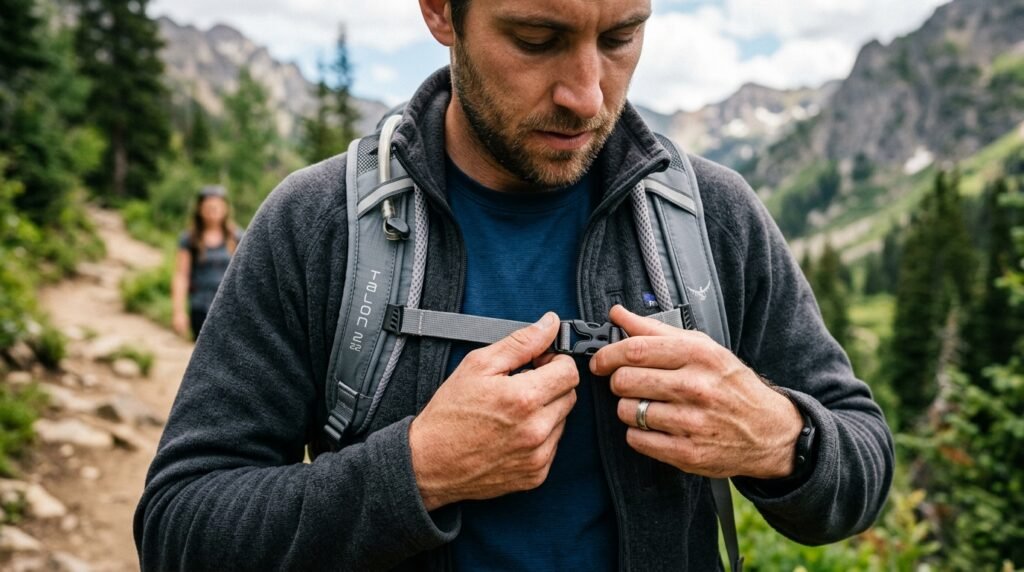
6. Hip Belt or Sternum Strap

2 PCS Backpack Chest Strap Add On, Adjustable Sternum Straps for Backpacks & School Bags, Heavy-Duty Chest Belt with Whistle, Quick-Release Buckle & Slide Lock
At this size, a full padded hip belt is not always needed. But a simple sternum strap, the strap that clips across your chest, keeps the bag from bouncing when you walk fast or go downhill.
7. Adjustable Straps
Shoulders come in different shapes and sizes. Look for straps you can tighten or loosen easily, so the bag sits high and close to your back instead of sagging low.
What Competitors Get Right (and What They Miss)
Most of the top ranking articles on this topic do a good job explaining pack sizes and comparing premium brand names. Sites like CleverHiker and OutdoorGearLab test packs on real trails and give solid weight and comfort data. Switchback Travel goes deep on comparing specific models side by side, which is useful if you already know you want a name brand pack.
But after reading through the top results, a few gaps keep showing up again and again:
- Almost none of them explain how to measure your torso before buying, even though a pack that does not fit your body will never feel right, no matter how good the brand is.
- Few articles mention budget options clearly. Most focus on premium packs priced well above fifty dollars, leaving out simple, affordable choices for casual hikers.
- Packing lists are missing. Readers are told what size to buy but rarely shown exactly what to pack inside it.
- Almost nobody compares a daypack to alternatives like a running vest or waist pack, which some hikers might actually prefer.
- Care and cleaning tips are skipped entirely, even though a dirty, mildewed pack is a common complaint among hikers.
This guide fills in all of those gaps below.
How to Measure Your Torso for a Better Fit
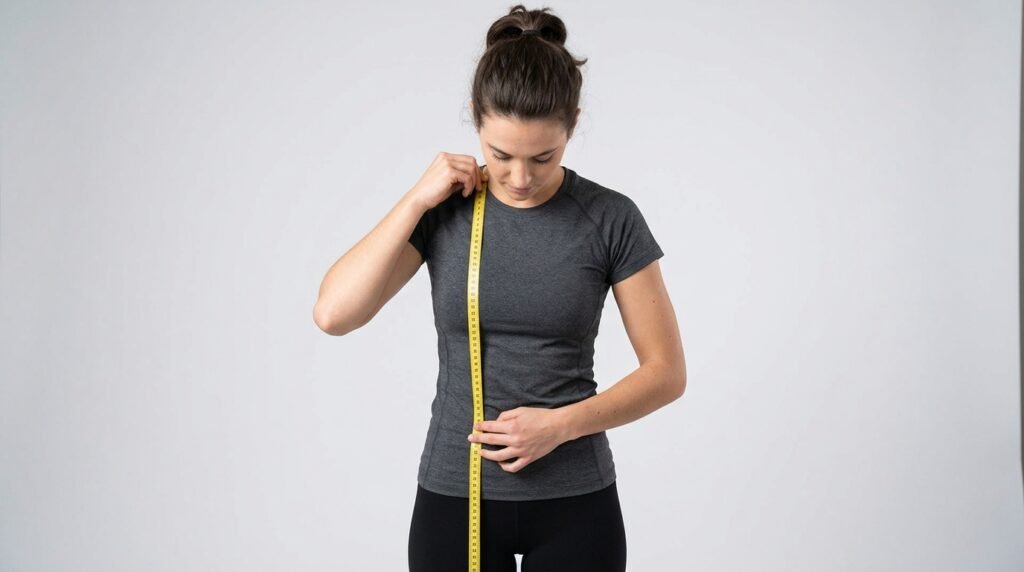
This step gets skipped by almost every other guide, but it takes thirty seconds and makes a real difference.
- Tilt your head forward and find the bump at the base of your neck. That is your starting point.
- Run your hands down to the top of your hip bones. That is your ending point.
- Measure the distance between the two points in inches.
Most small daypacks are one size fits most, but knowing your torso length helps you check the fit range listed on the product page before you buy. A pack that is too long for your torso will sit low and bounce. One that is too short will ride up near your shoulders.
What to Actually Pack in a Bag Under 20 Liters
Here is a simple packing list that fits comfortably inside most 15 to 20 liter daypacks for a half day hike.
- Water bottle or 1.5 to 2 liter hydration bladder
- Snacks or a small lunch
- Light rain jacket or windbreaker
- Sunscreen and a hat
- Small first aid kit
- Phone and portable charger
- Map or offline map on your phone
- Multi tool or small knife
- Trash bag for your own rubbish
This list follows the same idea behind the classic “ten essentials” hiking checklist, just scaled down to fit a smaller bag. If you are hiking somewhere remote, even on a short trail, it is worth keeping a compact version of these essentials with you every time.
Daypack vs Fanny Pack vs Running Vest
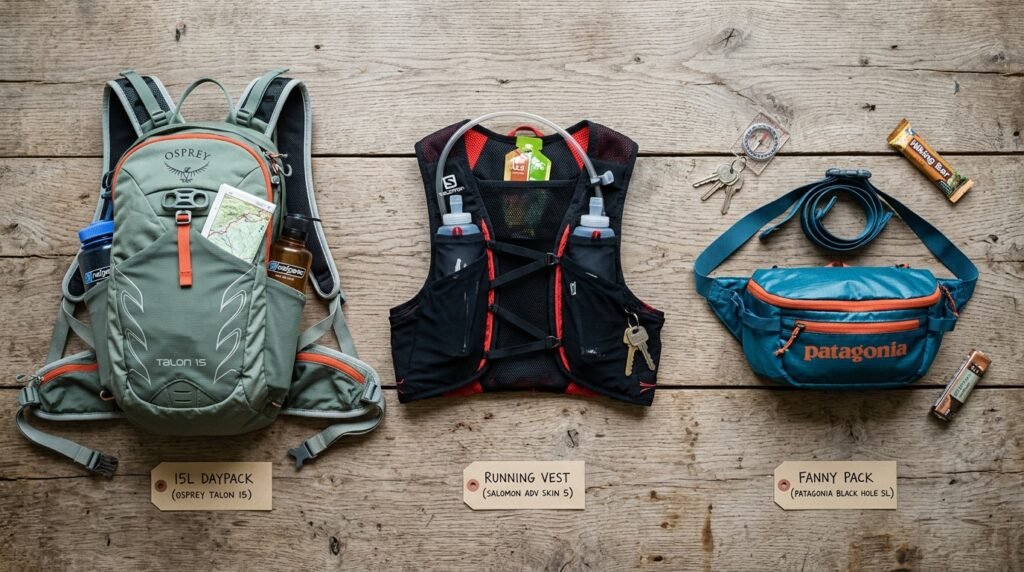
This comparison rarely shows up in other articles, but it genuinely helps people choose.
| Type | Best For | Downside |
|---|---|---|
| Small daypack (10 to 20L) | Short to half day hikes, general use | Slightly heavier than a vest |
| Running vest | Trail runners, fast hikers | Less room for a jacket or lunch |
| Fanny pack or waist pack | Very short walks, minimal gear | No room for a rain layer |
If you are unsure which one fits your style, a daypack is the safest all around choice. It holds more than a vest or waist pack, without going overboard like a full size hiking backpack.
How to Take Care of Your Daypack
A hiking daypack under 20 liters will last for years if you treat it right.
- Empty all pockets after every hike, crumbs attract bugs.
- Let it air dry fully before storing it, damp bags grow mildew fast.
- Spot clean with mild soap and a damp cloth instead of tossing it in a washing machine.
- Avoid direct sunlight for long term storage, it weakens the fabric over time.
- Check zippers every few months and rub a bit of candle wax on sticky ones.
Actionable Tips Before You Buy
- Try the bag on with something inside it, an empty bag always feels lighter than it will on the trail.
- Choose a lighter color if you hike in hot weather, dark bags absorb more heat.
- Pick a bag with at least one external water bottle pocket, digging through the main compartment gets old fast.
- If you travel often, look for a daypack that can also work as a personal item or carry on bag.
- Do not chase extra features you will not use, simpler bags are usually lighter and cheaper.
If you are also deciding between a small daypack and a larger backpacking style bag, our full comparison of hiking backpack sizes and capacities breaks down every range from 15 to 65 liters in plain language.
Best Uses for a Sub 20 Liter Daypack
- Morning trail walks
- Short mountain viewpoint hikes
- Trail running with light gear
- City sightseeing and day trips
- Airplane carry on for light travelers
- Quick errands where you need your hands free
For hikers who want one bag that handles both trail days and travel days, check out our picks for budget friendly travel and hiking backpacks that work well for both.
Frequently Asked Questions
Is a 20 liter backpack big enough for hiking?
Yes, for hikes under half a day in mild weather. A 20 liter hiking daypack under 20 liters comfortably holds water, snacks, a light jacket, and small essentials. For hikes longer than six hours or trips in cold weather, a bigger 25 to 35 liter pack fits better.
How many liters do I need for a day hike?
Most casual day hikers do well with 15 to 20 liters. Longer hikes with more gear usually need 20 to 25 liters, and CleverHiker’s testing found that a 20 to 25 liter pack is the most common choice for full day hikes across most seasons.
What is the difference between a daypack and a hiking backpack?
A daypack is built for single day trips and usually holds under 30 liters. A hiking backpack, or backpacking pack, is built for overnight or multi day trips and often starts around 40 liters, with a frame designed to carry heavier loads.
Can I use a hiking daypack under 20 liters for travel?
Yes. Many small hiking daypacks fit airline personal item size limits and work well as a lightweight travel bag, especially ones with a laptop sleeve and a few organized pockets.
Do small daypacks need a hip belt?
Not always. At this size, the load is usually light enough that a simple sternum strap is enough to keep the bag steady. A hip belt becomes more useful once the pack weight goes past ten pounds.
What size daypack is best for kids?
A 10 to 15 liter pack usually fits kids well for short family hikes, since it stays light and does not overwhelm a smaller frame.
Final Thoughts
Choosing a hiking daypack under 20 liters really comes down to three things. How long you hike, how much gear you actually carry, and how the bag feels on your back once it has weight in it. Skip the flashy features you will never use. Focus on fit, breathable material, and a couple of smart pockets.
A small pack should feel like it disappears once you put it on. If it does that, you picked the right one.
Looking for more gear advice before your next trip? Browse our full outdoor gear and hiking essentials guide or explore our current lineup of hiking daypacks and backpacks to find one that fits your style and budget.