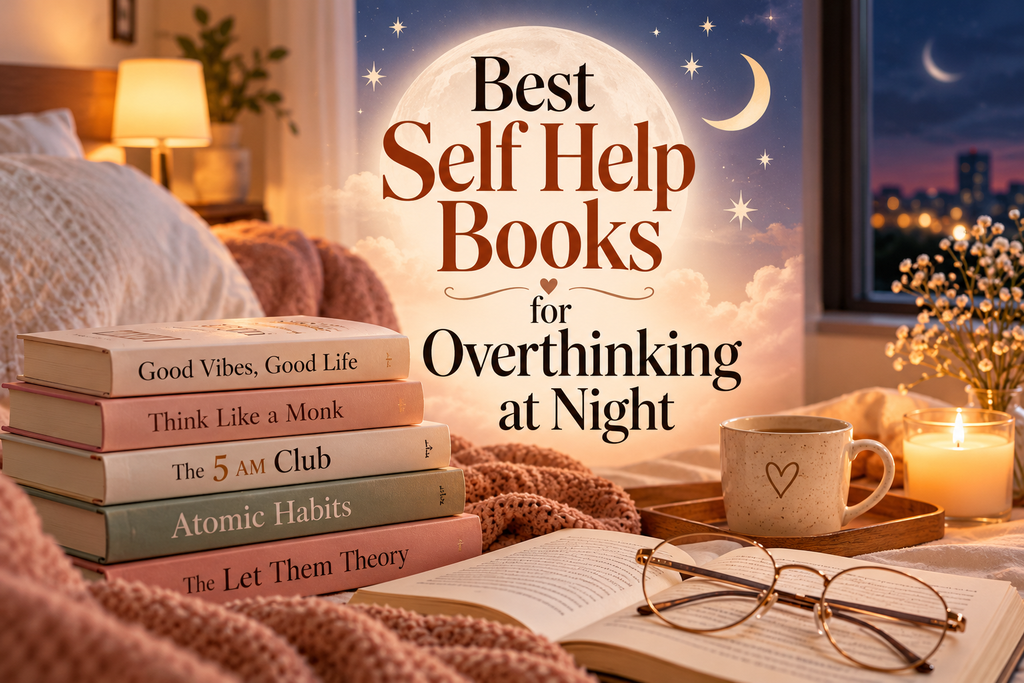
Best Self Help Books for Overthinking at Night
It is 1 a.m. Your room is quiet. Your body is tired. But your mind will not stop.
You replay a talk from today. You plan tomorrow. You worry about things that may never happen. Then you start to worry that you are not sleeping.
This is very common. And it is not your fault.
The good news is that the right book can help. A good book gives you simple tools to slow your thoughts. It also explains why your mind gets loud when the lights go off.
In this guide, you will find the best self help books for overthinking at night. You will also learn how to pick the right one, how to read it, and what to do tonight.
Quick answer: The best self help books for overthinking at night are Goodnight Mind by Colleen Carney and Rachel Manber, Chatter by Ethan Kross, and Stop Overthinking by Nick Trenton. Goodnight Mind helps with sleep. Chatter explains your inner voice. Stop Overthinking gives easy daily steps.
Quick picks:
- Best for sleep itself: Goodnight Mind
- Best for a harsh inner voice: Chatter
- Best for short, simple steps: Stop Overthinking
- Best full workbook: Quiet Your Mind and Get to Sleep

Why does your mind get so loud at night?
During the day, you are busy. There are people, work, and noise. At night, all of that stops. Your brain finally has space, so the thoughts rush in.
Sleep researcher Alexander Sweetman explains that in bed there are no sights or sounds to keep your mind busy. That is when racing thoughts show up. It can happen when you lie down or when you wake up in the night.
Then a second problem starts. You worry about not sleeping. An NHS self help guide says this worry makes things worse and keeps you awake longer.
It works like a loop:
- You lie down.
- The thoughts start.
- You feel stress.
- Your body stays alert.
- Sleep moves further away.

Is this normal?
Yes. Almost everyone has nights like this. It becomes a problem when it happens often and starts to hurt your days. We cover that near the end.
Can a self help book really help?
For many people, yes. But a book is a tool, not magic.
Mayo Clinic says cognitive behavioral therapy, or CBT, is generally the first treatment for lasting sleep problems. CBT teaches you to change thoughts and habits that keep you awake. Mayo also says you can look for self help books that teach these skills.
There is also a small study from Baylor University. Fifty seven students wrote a to do list for five minutes before bed. They fell asleep faster than students who wrote about tasks they had already finished. The group was small, so more research is needed. Still, the idea is easy and free to try.
A book cannot replace a doctor or therapist. But it can teach you the same basic skills at your own pace.

How to pick the right book for your kind of overthinking
Not all overthinking is the same. Pick the book that fits your main problem.
- You plan and worry about tomorrow: Try Stop Overthinking or Goodnight Mind.
- You replay the past and judge yourself: Try Chatter.
- You cannot fall asleep, then stress about it: Try Goodnight Mind.
- You feel worn out from stress: Start with our list of the best self help books for burnout recovery.
- Worry feels big and heavy: See our best self help books for anxiety beginners.
The 3 best self help books for overthinking at night
1. Goodnight Mind by Colleen Carney and Rachel Manber
Best for: People whose thoughts get loud the moment they lie down.
This book is built for night thinking. Its chapters show you how to quiet a busy mind in bed, how to put a buffer between your day and your sleep, how to relax your body, and how to think like a good sleeper.
The authors know sleep well. Carney is a psychology professor and sleep researcher in Toronto. Manber is a psychiatry professor at Stanford who leads an insomnia and sleep program. Their methods come from CBT.
Good to know: The book asks you to change some habits, not only your thoughts. Give it a few weeks.
Want a bigger workbook? The same authors wrote Quiet Your Mind and Get to Sleep. It uses CBT for people whose sleep problems come with anxiety, low mood, or chronic pain.

Goodnight Mind: Turn Off Your Noisy Thoughts and Get a Good Night’s Sleep
2. Chatter by Ethan Kross
Best for: People with a harsh inner voice who replay mistakes at night.
Kross is a psychologist at the University of Michigan. He runs a lab that studies emotion and self control, as this book review explains. The book shows why we talk to ourselves in loops. Then it gives you tools to stop.

Chatter: The Voice in Our Head, Why It Matters, and How to Harness It
Some of the tools are very simple. Talk to yourself like you would talk to a friend. Use small rituals. See a problem as a challenge, not a threat. Kross even opens with his own story of sleepless nights after a scary letter.
Good to know: This is not a sleep book. It will not give you a bedtime plan. Pair it with Goodnight Mind.

3. Stop Overthinking by Nick Trenton
Best for: People who want short, practical steps.
The book gives 23 techniques. They use mindfulness, staying in the present, and changing negative guesses about the future. The language is easy, and you can read a few pages at a time.
Good to know: It is a simple guide, not a medical book. It is a good first read if bigger books feel like too much.

Stop Overthinking: 23 Techniques to Relieve Stress, Stop Negative Spirals, Declutter Your Mind, and Focus on the Present
More books worth a look
- Overcoming Insomnia by Jack Edinger and Colleen Carney: A Mayo Clinic psychologist lists this workbook as a helpful way to do CBT for insomnia on your own.
- Mind Over Mood: A workbook with CBT exercises to spot and challenge unhelpful thoughts. Many therapists recommend it.
- The Untethered Soul by Michael Singer: Teaches you to watch your thoughts instead of getting pulled into them.
- Radical Acceptance by Tara Brach: Helps if your overthinking comes with self blame.
Want more ideas? Browse our full list of self help books.
How to read these books at night (what most lists skip)

Most lists tell you what to read. Few tell you how. Here is what works.
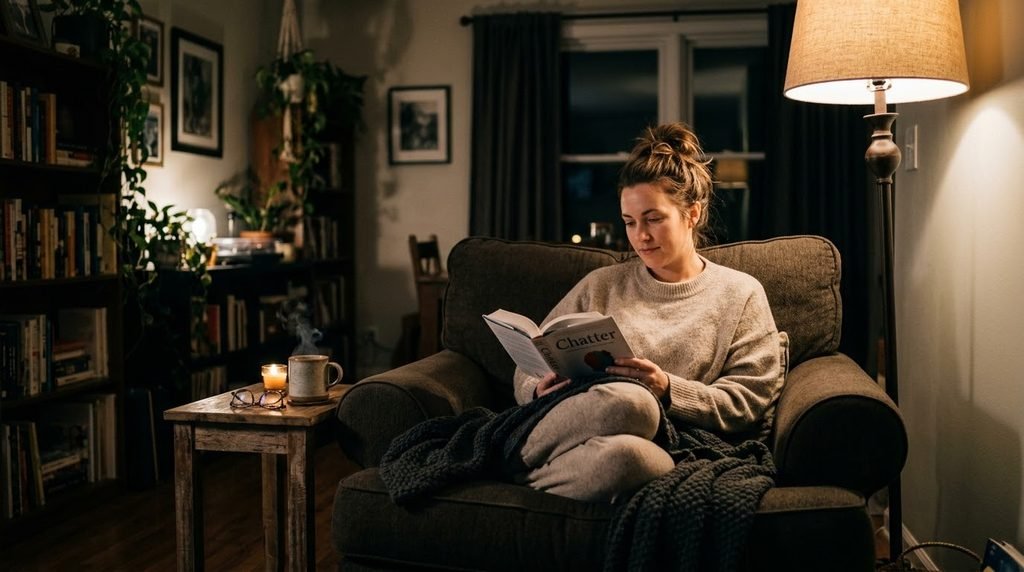
- Use the right time. Do workbook exercises in the evening, not in bed. Some sleep experts say to keep your bed for sleep only. So read in a chair or on the sofa first.
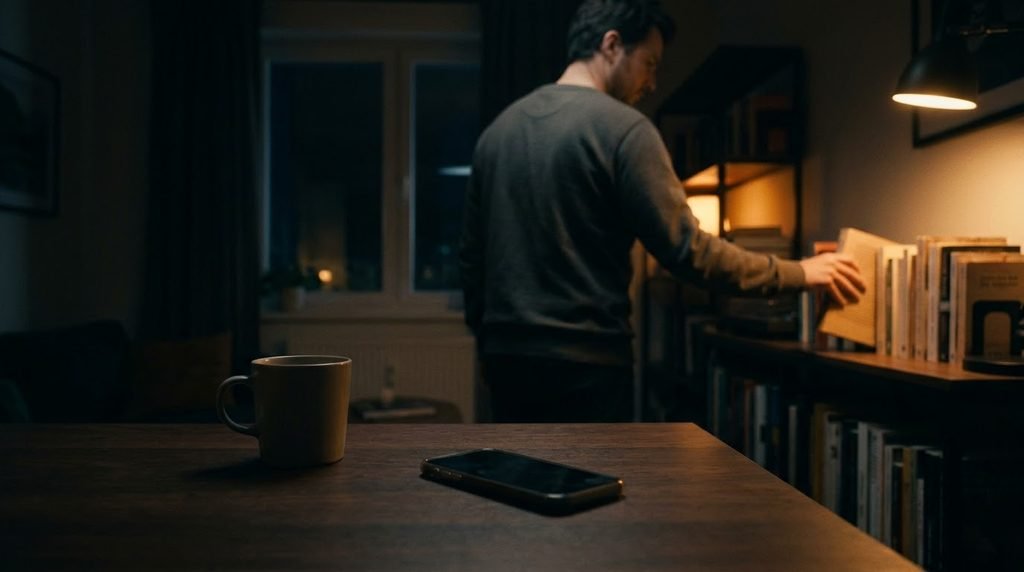
- Choose paper or audio. A phone pulls you into news and messages. A paper book or an audiobook does not.
- Keep it short. Ten to twenty minutes is enough.
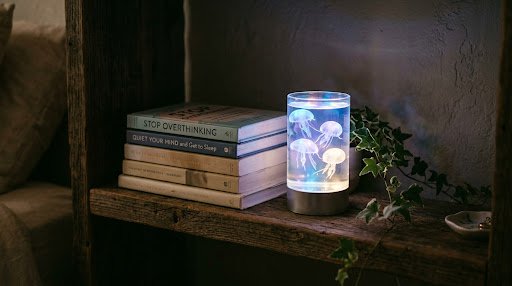
- Use soft light. A small lamp, like this jellyfish lamp, feels calm. A cozy spot, maybe with a heated weighted blanket, helps you relax.
- Try one idea at a time. Pick one tip from the book. Use it for a week. Then add another.
- Be patient. Habits take time. A few weeks of practice is a fair test.

A simple 5 step plan for tonight
- Write a to do list for tomorrow. Take five minutes. This gets tasks out of your head and onto paper.
- Write your worries on a second page. The NHS guide suggests writing down what is on your mind, then asking if you can do anything about it.
- Read a few pages. Use soft light and a calm book.
- Go to bed when you feel sleepy. Not before.
- Still awake and worrying after about 30 minutes? Get up. Sit somewhere quiet and do something calm. Go back to bed when you feel sleepy. The NHS guide says not to lie in bed worrying for longer than that.
What not to read at night
- Scary stories and thrillers
- Work or money books
- News on your phone
- Books that make you plan big life changes at 1 a.m.
Save those for the daytime.
When a book is not enough
See a doctor or therapist if:
- Bad sleep lasts for weeks
- You feel tired, sad, or on edge all day
- Your thoughts feel scary or out of control
- You have panic or a racing heart at night
CBT for insomnia is real treatment, and many types of providers offer it. If you ever think about hurting yourself, contact your local emergency number or a crisis line right away.
The bottom line
Overthinking at night is common, and it can improve. Start with one book and one small habit.
If you want one pick, choose Goodnight Mind. It is made for busy minds at bedtime. Add Chatter if your inner voice is harsh. Add Stop Overthinking if you want quick, simple steps. These are the best self help books for overthinking at night because each one gives you something you can try the same evening.
Tonight, write your list, read a few pages, and let the book do its slow work.

FAQs
What is the best self help book for overthinking at night?
Goodnight Mind by Colleen Carney and Rachel Manber is the best fit for most people. It is written for busy minds at bedtime and uses CBT methods.
Does reading before bed help stop overthinking?
Often, yes. A calm book gives your mind something gentle to follow. It works best with other habits, like writing a to do list and keeping a steady bedtime.
Which book is best if I also cannot sleep?
Goodnight Mind. If you want a bigger workbook, try Quiet Your Mind and Get to Sleep by the same authors.
Should I read in bed?
If reading relaxes you, a few light pages are fine. Some sleep experts say to keep your bed for sleep only. If you like that rule, read in a chair first.
Are audiobooks okay?
Yes. They are a good choice when your eyes are tired. Keep the volume low and the screen off.
How long until I feel a change?
There is no fixed time. Many people need a few weeks of daily practice. Try one tip at a time and keep going.
Is overthinking at night a sign of anxiety?
Sometimes. Stress and worry are common causes. If it happens often or hurts your days, talk to a doctor or therapist.
Can a book replace therapy?
No. A book can teach skills and support you. It cannot replace a professional, especially if your sleep or mood is getting worse.
When you buy through links on our site, we may earn an affiliate commission.