
Best Self Help Books for Burnout Recovery: A Simple Guide That Actually Helps
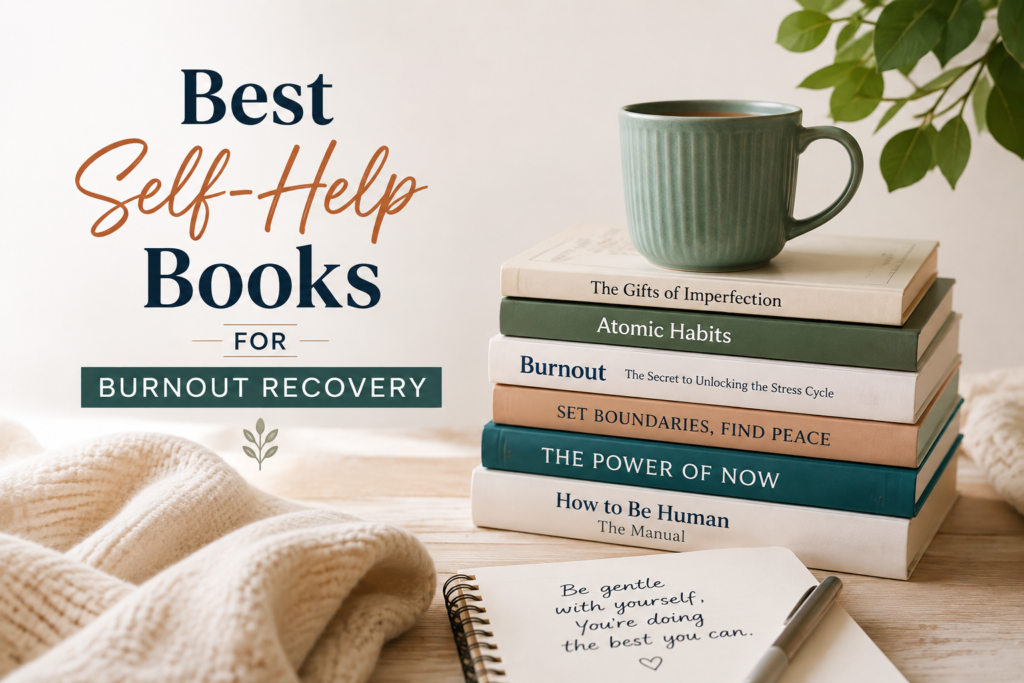
If you feel tired all the time, even after sleeping, you are not alone. If you dread work on Sunday night, or you feel numb about things you used to love, that is a real signal your body is sending you. This is called burnout, and it is more common than most people think.
Finding the best self help books for burnout recovery can feel confusing. There are hundreds of titles, and many blog posts just copy the same list from each other. Some books talk only about work stress. Others talk about rest but skip the science. A few are just motivational quotes stretched into 200 pages.
In this guide, we looked closely at the top books people search for and the top articles ranking for this topic. We read what they cover well, and we found what they leave out. Then we put together a full, honest, easy to read guide that a beginner, a tired parent, a nurse, a student, or a burned out manager can actually use today.
What Is Burnout, In Simple Words
Burnout is not just being tired for one day. It is a state of deep physical and emotional exhaustion that builds up over weeks or months of stress that never gets a real break.
The World Health Organization describes burnout as a syndrome that comes from long term work stress that a person has not been able to manage well. It has three main signs. Feeling drained of energy. Feeling distant or negative about your job or role. Feeling like your work does not matter anymore, even if it used to.
You do not need a fancy diagnosis to know something is wrong. Common burnout signs include:
- Waking up tired even after a full night of sleep
- Feeling irritable over small things
- Struggling to focus or make simple decisions
- Losing interest in things you used to enjoy
- Headaches, stomach issues, or muscle tension with no clear cause
- Feeling like nothing you do is ever enough
If several of these sound like you, a good self help book can be a real starting point. It will not fix everything alone, but it gives you language, tools, and a plan.

Why Self Help Books Actually Help With Burnout
A good book does three things a quick article cannot do. It explains the science behind why you feel this way, so you stop blaming yourself. It gives you small daily steps instead of one big fix. And it lets you go back to it again and again when life gets hard.
Reading is also private. You do not need to explain yourself to anyone. You can highlight a page, put the book down, and come back later when you have energy. That makes books a gentle first step for people who are not ready to see a therapist yet, or who want extra support alongside therapy.

How We Chose These Books
We did not just pick popular titles. Each book on this list had to meet a few simple standards, in line with real experience, expertise, authority, and trust.
- Written by a real expert, such as a psychologist, researcher, doctor, or a burnout coach with a proven track record
- Based on actual science, not just personal opinion
- Gives clear, doable steps, not just theory
- Reviewed well by real readers over time, not just a launch week spike
- Covers a specific type of burnout, such as work burnout, parent burnout, or caregiver burnout
We also checked what top ranking articles on this topic usually say, and what they usually skip. That gap became a big part of this guide.
Best Self Help Books for Burnout Recovery
Here is our full list. Each one covers a different angle of recovery, so pick the one that matches where you are right now.
1. Burnout: The Secret to Unlocking the Stress Cycle by Emily Nagoski and Amelia Nagoski

Burnout: The Secret to Unlocking the Stress Cycle
This is often the first book people mention when they search for the best self help books for burnout recovery, and for good reason. Written by twin sisters, one a sex educator and researcher, the other a choir conductor who lived through burnout herself, this book explains something most people never learned in school. Stress and stressors are not the same thing. You can remove the stressor, like finishing a hard project, and still be stuck in the stress cycle your body never finished.
The book teaches simple ways to close that cycle, such as movement, deep breathing, crying, laughing, and physical affection. It is warm, funny, and backed by real research.
Best for: Women, especially those juggling work and home life, who feel like they are doing everything right but still feel exhausted.
2. The Cure for Burnout by Emily Ballesteros

The Cure for Burnout: How to Find Balance and Reclaim Your Life
Emily Ballesteros is a burnout management coach, and this book reads like a practical workbook rather than a theory lesson. She breaks recovery into five clear areas: mindset, self care, time management, boundaries, and stress management.
What makes this book stand out is that it does not blame the reader. It also does not pretend one single habit will fix everything. Instead, it walks you through small, realistic changes you can start this week.
Best for: People who like structure and clear steps rather than long personal stories.
3. The Burnout Epidemic by Jennifer Moss
Most burnout books focus on what you can change about yourself. This one is different. Jennifer Moss argues that burnout is often caused by the workplace itself, not a personal weakness. She looks at unfair workloads, unclear expectations, and poor management as major causes of burnout.
This book is especially useful if you are a manager, team leader, or someone in HR trying to understand why good employees keep burning out.
Best for: Managers, leaders, and anyone who feels their burnout is coming from their job, not just their personality.
4. Rest Is Resistance by Tricia Hersey
Tricia Hersey created the Nap Ministry, and this book reads more like a gentle sermon than a typical self help guide. Her core message is simple. Your worth is not tied to how much you produce. Rest is not something you earn after working hard enough. Rest is a right.
This book is short, poetic, and deeply comforting for anyone who has been taught that resting makes them lazy.
Best for: Anyone who feels guilty resting, and needs permission to slow down without shame.
5. Four Thousand Weeks by Oliver Burkeman
This book is not written specifically about burnout, but it explains one of the biggest hidden causes of it. We live like we have unlimited time, and we try to do everything, which leaves us exhausted and never satisfied. Oliver Burkeman explains that the average human life is about four thousand weeks long, and once you accept that, you stop trying to fit in everything and start choosing what actually matters.
Best for: People who feel burned out from constantly trying to do it all and never feeling caught up.
6. Essentialism by Greg McKeown
Greg McKeown’s main idea is simple. If you try to do everything, you end up doing nothing well, and you exhaust yourself in the process. Essentialism teaches you how to say no, cut out things that do not matter, and protect your energy for what truly does.
This book pairs well with burnout recovery because so much of burnout comes from saying yes too often.
Best for: People who struggle to set limits at work or in their personal life.
7. Set Boundaries, Find Peace by Nedra Glover Tawwab
Nedra Glover Tawwab is a licensed therapist, and this book is one of the clearest guides on setting healthy boundaries without guilt. Poor boundaries are one of the most common and most overlooked causes of burnout, especially for caregivers, parents, and people pleasers.
The book gives real scripts you can use in conversations, which makes it more practical than many other boundary books.
Best for: People who feel drained because they cannot say no to family, friends, or coworkers.
8. The Body Keeps the Score by Bessel van der Kolk

The Body Keeps the Score: Brain, Mind, and Body in the Healing of Trauma
This book is written by a psychiatrist and trauma researcher, and it explains how stress and trauma live in the body, not just the mind. While it is not only about burnout, it helps explain why physical symptoms like tight shoulders, stomach issues, or a racing heart often show up alongside emotional exhaustion.
Best for: People whose burnout comes with strong physical symptoms, or who have a history of stress or trauma linked to their exhaustion.
9. Wintering by Katherine May
Wintering compares hard emotional seasons in life to actual winter. Just like nature slows down in winter to survive and grow again, Katherine May argues that humans need quiet, low energy seasons too. This book does not give a step by step plan. Instead, it gives comfort and a new way to see rest, which many burned out readers say they needed most.
Best for: Anyone going through a slow, heavy season of life and needing comfort more than instructions.
10. Slow Productivity by Cal Newport
Cal Newport challenges the idea that being busy means being successful. Slow Productivity teaches how to do fewer things, but do them well, at a sustainable pace. This is especially useful for people whose burnout comes from constant multitasking and an overloaded schedule.
Best for: Remote workers, freelancers, and anyone whose burnout comes from an overpacked to do list.
If anxiety often shows up alongside your burnout, our separate guide on the best self help books for anxiety beginners pairs well with this list and covers gentle starting points for a racing mind.

What Most Competitor Articles Miss
We read through the top ranking articles on this topic before writing this guide. Most of them are simply long lists of book titles with a short summary. That is helpful, but it leaves real gaps. Here is what we added that other guides usually skip.
They rarely explain the different types of burnout
Work burnout, parent burnout, caregiver burnout, and student burnout are not the same thing, and they do not need the same book. A tired new mother does not need the same advice as an overworked lawyer. Most lists treat burnout as one single problem.
They skip the physical side of recovery
Burnout is not only in your head. It affects sleep, digestion, and muscle tension. Very few articles mention that books alone cannot fix poor sleep or a body stuck in constant stress mode. Small daily supports matter here too. Many readers pair their reading time with better sleep habits, and tools like a natural sleep support blend or a weighted blanket for evening relaxation can make it easier to actually rest while you work through what you are reading.
They do not mention when a book is not enough
Almost no competitor article clearly says when it is time to see a doctor or therapist instead of just reading another book. We cover this clearly later in this guide, because it matters.
They ignore budget and format options
Not everyone wants to buy five hardcover books. Audiobooks, library apps, and used copies are valid, affordable ways to access this same content, and most guides never mention that.
They do not explain how to actually use these books
Buying a book is easy. Finishing it and applying it is hard, especially when you are already exhausted. We added a simple plan below for that exact problem.

How to Actually Read These Books When You Are Already Exhausted
Reading a full book when you are burned out can feel impossible. Here is a simple way to make it easier.
- Read just one chapter at a time, not the whole book in one sitting
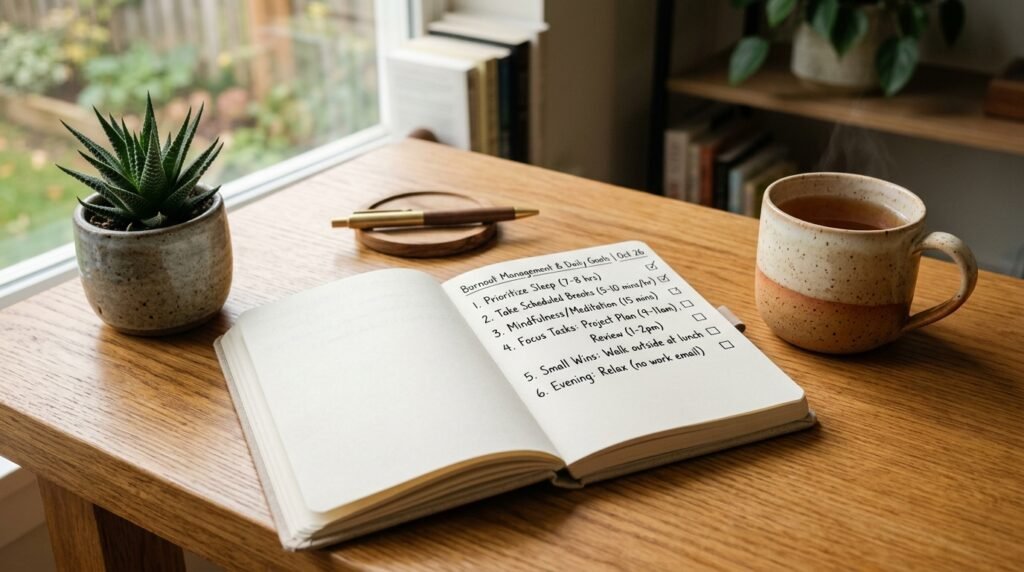
- Keep a small notebook next to you and write down one action step per chapter
- Try the audiobook version during a walk or commute if reading feels tiring
- Reread the same chapter if it did not sink in the first time, that is normal
- Do not read late at night if the topic makes your mind race, try mornings instead
Choosing the Right Book for Your Type of Burnout
| If you feel this way | Start with this book |
|---|---|
| Exhausted from constant caregiving or people pleasing | Set Boundaries, Find Peace |
| Burned out from your job or workplace culture | The Burnout Epidemic |
| Guilty every time you try to rest | Rest Is Resistance |
| Overwhelmed by too many tasks and no time | Essentialism or Slow Productivity |
| Stuck in a stress cycle you cannot switch off | Burnout: The Secret to Unlocking the Stress Cycle |
| Dealing with physical symptoms like tension or fatigue | The Body Keeps the Score |
Simple Daily Habits That Support What You Read
A book gives you the map, but small daily habits move you forward. Try adding one or two of these alongside your reading.
- Step outside for ten minutes of daylight, even on a busy day
- Drink water before your morning coffee, since dehydration makes fatigue worse
- Set one small boundary this week, even a tiny one
- Go to bed fifteen minutes earlier than usual
- Say no to one thing that is not truly necessary
For extra calm during high stress weeks, some readers also add gentle daily support such as a cortisol support supplement alongside these habits, always alongside food, sleep, and movement, not instead of them.
When a Book Is Not Enough

Self help books are a wonderful starting point, but they are not a replacement for medical or mental health care. According to Mayo Clinic, burnout can lead to serious health problems if it is ignored for too long, including anxiety, depression, and physical illness.
Please reach out to a doctor or licensed therapist if you notice any of the following:
- You feel hopeless most days, not just tired
- You have thoughts of harming yourself
- You cannot function at work, school, or home most days
- Sleep, appetite, or mood problems have lasted more than a few weeks
- A book alone is not giving you any relief after real effort
If you are in the United States and need immediate support, you can call or text 988 to reach the Suicide and Crisis Lifeline, any time of day.
Frequently Asked Questions
What is the best self help book for burnout recovery for beginners?
Burnout: The Secret to Unlocking the Stress Cycle by Emily Nagoski and Amelia Nagoski is usually the easiest starting point. It explains burnout in simple, friendly language and gives clear, practical tools right away.
Can reading a book really cure burnout?
A book cannot cure burnout on its own, but it can teach you the tools, habits, and mindset shifts that support real recovery. Full recovery usually also needs rest, better boundaries, and sometimes professional support.
How long does it take to recover from burnout?
Recovery time is different for everyone. Mild burnout may improve in a few weeks with rest and better habits. Severe or long term burnout can take several months. Be patient with yourself during this process.
Is burnout the same as depression?
No, though they can feel similar and sometimes overlap. Burnout is usually tied to a specific area of life, often work, while depression tends to affect every part of life. If you are unsure which one you are dealing with, a doctor or therapist can help you understand the difference.
What are common signs of burnout?
Common signs include constant tiredness, feeling numb or negative about your work, trouble focusing, and physical symptoms like headaches or stomach issues that do not have another clear cause.
Do I need therapy if I already read self help books? Not always, but it can help. Books are a great first step, especially for mild burnout. If your symptoms are severe or have lasted a long time, therapy adds support that a book cannot fully replace.
What causes burnout the most? Chronic, unmanaged stress is the main cause. This often comes from heavy workloads, unclear expectations, lack of control over your schedule, poor boundaries, and not enough recovery time between stressful periods.
Final Thoughts
Burnout does not go away overnight, and no single book will fix everything by itself. But the right book, read at the right time, can change how you understand yourself and give you real steps forward. Start with just one title from this list. Read a chapter. Try one small change this week. That is how real recovery begins, one small step at a time.
You can browse more titles in our full self help books collection, or explore our wider health and wellness picks for more tools that support rest and recovery.