Best Vitamin C Serum for Sensitive Skin That Won’t Cause Redness
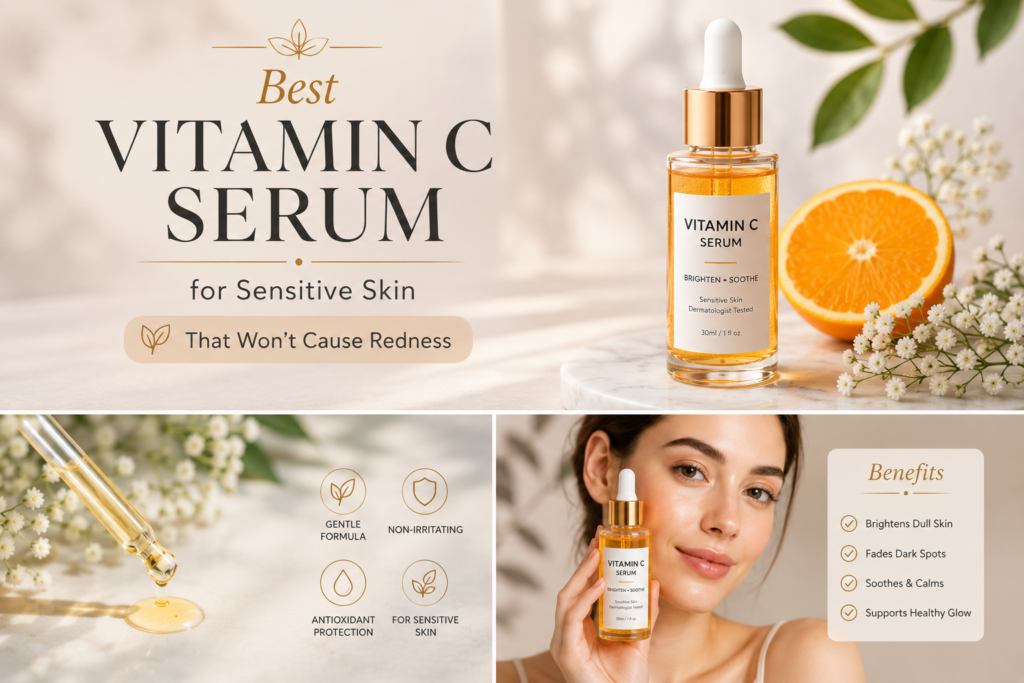
Vitamin C is one of the most talked-about ingredients in skincare, and for good reason. It brightens dull skin, fades dark spots, and helps your face look more even over time. But if you have sensitive skin, vitamin C can feel like a gamble. You put it on hoping for a glow, and instead your cheeks turn pink and your skin starts to sting.
The good news is that this does not have to happen. The right vitamin C serum for sensitive skin can give you all the brightening benefits without any of the redness or burning. The trick is knowing what to look for before you buy, not after your face is already stinging in the mirror.
This guide breaks down exactly what causes vitamin C to irritate sensitive skin, which types of vitamin C are gentle enough to trust, and which real products actually deliver on that promise. If you have ever searched for the best vitamin C serum for sensitive skin and ended up more confused than when you started, this article is for you.
Why Vitamin C Sometimes Causes Redness
Vitamin C is not naturally harmful to the skin. Most of the time, the redness people experience comes down to how the serum is made, not the vitamin C itself.
Here is what usually causes the problem.
- The form of vitamin C is too strong.
- Pure vitamin C, called L ascorbic acid, needs a very acidic environment to stay stable. That acidity is often what causes stinging and redness, especially on sensitive skin.
- The concentration is too high.
- Many brands push serums with 15 to 20 percent vitamin C, assuming stronger always means better. For sensitive skin, that strength can push your skin past what it can comfortably handle.
- The pH is too low.
- A serum with a very low pH feels sharp and acidic on the skin, similar to touching something sour. Sensitive skin reacts to that faster than normal skin does.
- Other harsh ingredients are mixed in.
- Some serums pair vitamin C with strong acids or heavy fragrance, which adds even more irritation on top of the vitamin C itself.
Once you understand this, the solution becomes simple. You do not need to avoid vitamin C completely. You just need a gentler form of it.
What Makes a Vitamin C Serum Gentle Enough for Sensitive Skin
Look for these signs before you buy.
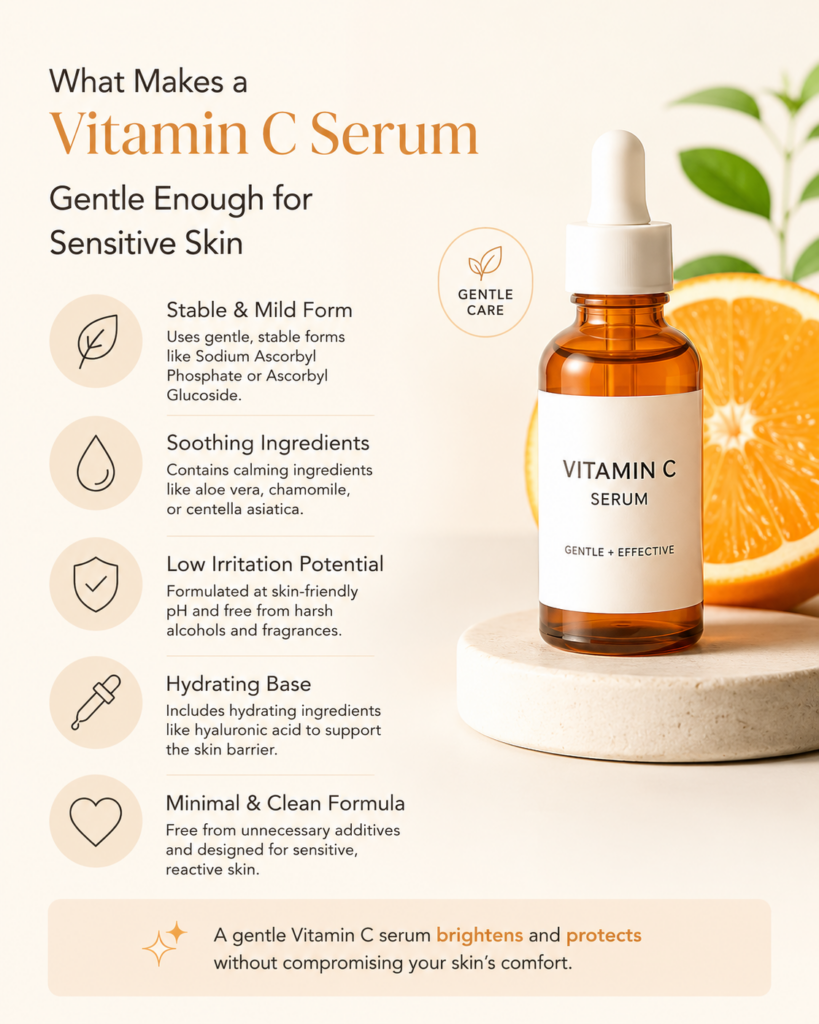
A gentle derivative of vitamin C
Instead of pure L ascorbic acid, look for names like Sodium Ascorbyl Phosphate, Magnesium Ascorbyl Phosphate, Tetrahexyldecyl Ascorbate, or Ethyl Ascorbic Acid. These forms still brighten skin, but they work at a higher, more skin friendly pH, so they do not sting the way pure vitamin C can.
A moderate percentage
You do not need the strongest serum on the shelf. Somewhere between 5 and 10 percent is usually enough for sensitive skin to see real results without overwhelming the skin barrier.
Calming ingredients alongside the vitamin C
Formulas that include niacinamide, aloe, panthenol, or centella asiatica tend to soothe the skin while the vitamin C does its job, instead of leaving your face to handle the vitamin C alone.
No added fragrance
Fragrance is one of the most common triggers for redness in sensitive skin, even when the vitamin C itself is gentle. A fragrance free label is worth checking every single time.
If a serum checks these boxes, it has a real shot at being the best vitamin C serum for sensitive skin without the usual downsides.

Where Most Vitamin C Guides Fall Short
Most articles about vitamin C serums fall into the same pattern. They list ten products with a short paragraph each, mention the percentage of vitamin C, and move on. That leaves a few important gaps unfilled.
- They rarely explain why a specific form of vitamin C is gentler, so readers cannot apply the lesson to future products.
- They rarely mention how slowly you should introduce vitamin C into a sensitive skin routine, which is often the real reason people experience redness in the first place.
- They skip what to do if redness still happens, leaving readers stuck once they have already reacted.
- They rarely explain how vitamin C fits with other products people already use, like sunscreen, moisturizer, or niacinamide.
This guide covers all of that, not just a product list.
Best Vitamin C Serum Picks for Sensitive Skin
1. TruSkin Vitamin C Serum
This serum uses Sodium Ascorbyl Phosphate, a gentle form of vitamin C that works at a skin friendly pH close to 6. It is paired with hyaluronic acid, vitamin E, and aloe vera, which help hydrate and calm the skin while the vitamin C brightens. It is fragrance free and priced around twenty dollars, which makes it an easy first vitamin C serum to try if your skin reacts easily.
2. La Roche Posay Vitamin C10 Serum
This one uses a slightly higher concentration of pure vitamin C at 10 percent, which is lower than the 15 to 20 percent found in many other serums. It also includes a calming ingredient called neurosensine, which is specifically meant to soothe reactive skin. This is a good option for someone who has already built up some tolerance to gentler serums and wants a small step up.
3. The Ordinary Vitamin C Suspension with Ginseng

The Ordinary Multi-Antioxidant Radiance Serum, Vitamin C Serum For Face, Brighten & Protect Skin (1 Fl Oz)
$14.00 per fluid ounce
This formula pairs vitamin C with ginseng, which is known for calming redness and inflammation. It tends to work well for skin that gets stressed easily, though it is worth patch testing first since The Ordinary offers a few different vitamin C formulas at different strengths.
4. Dermalogica BioLumin C Serum

Dermalogica Biolumin-C Serum, Vitamin C Dark Spot Serum for Face with Peptide & AHA
$79.00 per fluid ounce
This serum uses a stable, bioavailable form of vitamin C along with chia seed oil, which supports the skin barrier while the serum works. It is a slightly more expensive option, but it is built specifically with sensitive and easily irritated skin in mind.
How to Introduce Vitamin C Without Triggering Redness
Even the gentlest vitamin C serum can cause redness if you introduce it too fast. Follow these steps to avoid that.
- Patch test first. Apply a small amount to your inner arm or jawline and wait 24 hours before using it on your whole face.
- Start with three times a week. Do not jump straight to daily use. Give your skin time to adjust.
- Apply it to clean, dry skin. Wet skin can make vitamin C absorb faster and feel stronger, which increases the risk.
- Follow with a moisturizer. This helps lock in hydration and reduces the chance of dryness related redness.
- Always wear sunscreen the next morning. Vitamin C can make skin slightly more sensitive to sun, so sunscreen is not optional the day after use.
If you want a deeper breakdown of building a full sensitive skin routine around actives like this, our guide to layering skincare actives without irritation walks through the order and pacing in more detail.
What to Do if Your Skin Still Turns Red
Sometimes, even with a gentle serum, your skin might react. Here is what to do if that happens.
- Stop using the serum immediately and let your skin calm down for a few days.
- Apply a plain, fragrance free moisturizer to support your skin barrier while it recovers.
- Avoid introducing any other new active ingredients until the redness fully settles.
- Once your skin has calmed down, try using the serum less often, such as once a week, before slowly increasing again.
According to the American Academy of Dermatology, persistent redness or burning after a skincare product is a sign to stop using it and simplify your routine rather than pushing through the irritation.
Vitamin C and Your Skin Barrier
Sensitive skin often comes down to a weakened skin barrier, which is the outer layer that protects your skin from irritation and moisture loss. When your barrier is compromised, almost any active ingredient can feel too strong, including vitamin C. This is why pairing vitamin C with barrier supporting ingredients like ceramides or niacinamide often works better than using vitamin C alone. Research summarized by the National Institutes of Health supports this idea, showing that a healthy skin barrier plays a major role in how well skin tolerates active ingredients like vitamin C.
If your skin often reacts to new products in general, it may help to look at your full routine rather than just the vitamin C serum. Our complete guide to choosing skincare for your skin type is a good place to start if you want to understand your skin better before adding new actives.
Quick Comparison Table
| Product | Vitamin C Type | Strength | Best For |
|---|---|---|---|
| TruSkin Vitamin C Serum | Sodium Ascorbyl Phosphate | Gentle | First time users |
| La Roche Posay Vitamin C10 | L Ascorbic Acid, 10 percent | Moderate | Building tolerance |
| The Ordinary with Ginseng | Vitamin C plus Ginseng | Varies by formula | Redness prone skin |
| Dermalogica BioLumin C | Stable bioavailable form | Gentle to moderate | Barrier support |
Frequently Asked Questions
Can sensitive skin use vitamin C serum at all?
Yes. Sensitive skin can use vitamin C serum as long as the formula uses a gentle derivative, a moderate strength, and is introduced slowly rather than daily right away.
What type of vitamin C is best for sensitive skin?
Sodium Ascorbyl Phosphate, Magnesium Ascorbyl Phosphate, and Ethyl Ascorbic Acid are generally considered gentler than pure L ascorbic acid, since they work at a higher, less irritating pH.
Should I use vitamin C in the morning or at night?
Morning is usually best, since vitamin C works well alongside sunscreen to protect skin from environmental stress during the day.
Why does my vitamin C serum smell strange?
Vitamin C can oxidize over time, which sometimes changes its smell and reduces its effectiveness. If a serum smells noticeably different than when you first opened it, it may be time to replace it.
Can I use vitamin C with niacinamide?
Yes. Vitamin C and niacinamide work well together and are often used in the same routine to support brightening and barrier health at the same time.
Final Thoughts
Sensitive skin does not have to miss out on the benefits of vitamin C. The real key is picking the best vitamin C serum for sensitive skin based on the type of vitamin C used, not just the percentage on the label. A gentle derivative, a fragrance free formula, and a slow introduction will get you the glow you want without the redness you are trying to avoid. Start slow, watch how your skin responds, and adjust from there. Your skin will tell you what it can handle, you just have to listen to it.